+86-0318 8812222 sales@hengyangrubber.com
As water resource management becomes increasingly important for flood control, irrigation, urban drainage, and ecological restoration, movable dams have gained widespread attention. Unlike traditional concrete dams, movable dams offer flexibility, adaptability, and reduced environmental impact. Among the most commonly used types are inflatable rubber dams and hydraulic steel dams.
Although both serve similar purposes—such as regulating water levels, controlling floods, and improving water storage—their structural design, operation mechanisms, costs, and application scenarios differ significantly. Understanding these differences is essential for engineers, project owners, and policymakers who want to select the most suitable solution for a specific project.
This article provides a comprehensive comparison of inflatable rubber dams and hydraulic steel dams, focusing on key aspects such as construction, performance, installation, maintenance, lifespan, and economic efficiency.
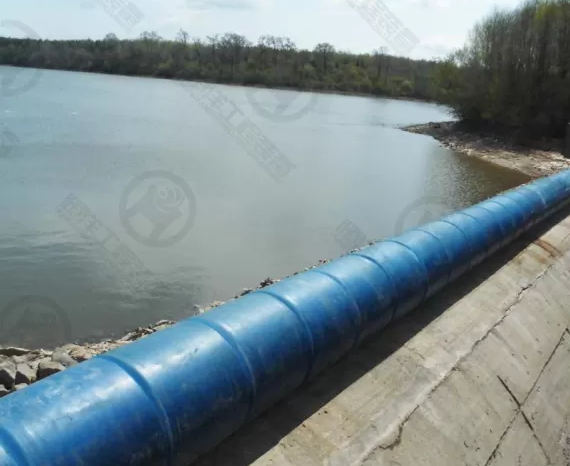
An inflatable rubber dam, also known as a rubber weir or inflatable barrage, is made primarily of high-strength synthetic rubber reinforced with fabric layers. It is anchored to a concrete foundation and inflated using air, water, or a combination of both.
When inflated, the dam rises to retain water. When deflated, it collapses flat onto the riverbed, allowing water and sediment to pass freely.
Flexible rubber structure
Inflation and deflation controlled by air or water pressure
Lightweight compared to steel structures
Minimal visual impact when deflated
Inflatable rubber dams are widely used in irrigation systems, urban rivers, flood control projects, and landscape water features due to their simplicity and adaptability.
A hydraulic steel dam is a rigid movable dam composed mainly of steel gates, hydraulic cylinders, and mechanical control systems. The dam gates are raised or lowered by hydraulic actuators to regulate upstream water levels.
Unlike rubber dams, hydraulic steel dams rely on mechanical movement rather than inflation. They are often installed as segment gates, flap gates, or radial gates, depending on design requirements.
Rigid steel construction
Precise hydraulic control system
High structural strength
Suitable for heavy-duty applications
Hydraulic steel dams are commonly used in large rivers, navigation channels, and hydropower-related projects where precise control and durability are critical.

Inflatable rubber dams are made from elastomeric materials reinforced with nylon or polyester fabric. This gives them excellent flexibility and resistance to deformation.
Hydraulic steel dams, by contrast, use carbon steel or stainless steel components. These materials provide high load-bearing capacity but lack flexibility.
Rubber dams feature a relatively simple structure with fewer mechanical parts. Steel dams involve complex assemblies, including hinges, pistons, hydraulic pumps, and control systems.
As a result, inflatable rubber dams are easier to design and fabricate, while hydraulic steel dams require more precise engineering and manufacturing processes.
Installing an inflatable rubber dam typically involves:
Preparing a concrete foundation
Anchoring the rubber body
Connecting inflation and control pipelines
The installation process is relatively fast and requires less heavy machinery. This makes rubber dams suitable for projects with tight construction schedules or limited site access.
Hydraulic steel dam installation is more labor-intensive. It often includes:
Large-scale civil works
Installation of steel gate structures
Hydraulic system commissioning
Due to their weight and complexity, steel dams usually require cranes, specialized technicians, and longer construction periods.
Inflatable rubber dams offer smooth and continuous water level adjustment by controlling internal pressure. This makes them ideal for applications where frequent changes in water level are needed.
Hydraulic steel dams provide precise gate positioning, which is advantageous in navigation and hydropower projects. However, their operation is generally less flexible compared to rubber dams.
When fully deflated, an inflatable rubber dam allows unobstructed flood discharge, reducing upstream water pressure and flood risk.
Hydraulic steel dams can also release floodwaters efficiently, but mechanical operation may be slower in emergency situations if power or hydraulic systems fail.
Maintenance mainly focuses on:
Monitoring rubber aging
Checking anchoring bolts
Inspecting inflation systems
With proper material selection and quality control, modern rubber dams can achieve long service lives with relatively low maintenance costs. Companies such as HengYang Rubber have contributed to improvements in rubber formulation and reinforcement techniques, enhancing durability in harsh environments.
Steel dams require regular maintenance, including:
Corrosion protection
Lubrication of moving parts
Hydraulic system inspections
These tasks often result in higher long-term operational costs, especially in humid or corrosive environments.
Inflatable rubber dams typically have a service life of 20–30 years, depending on material quality, environmental conditions, and maintenance practices.
Hydraulic steel dams can last several decades, sometimes exceeding 50 years. However, their longevity depends heavily on corrosion control and mechanical system upkeep.
While steel dams may offer longer theoretical lifespans, rubber dams provide sufficient durability for many medium-scale water management projects at a lower overall cost.
Inflatable rubber dams are considered more environmentally friendly because:
They allow complete riverbed exposure when deflated
They reduce sediment accumulation
They enable fish migration during deflation
Hydraulic steel dams, due to their rigid structure, may have a greater impact on sediment flow and aquatic ecosystems.
Rubber dams blend more naturally into landscapes, especially in urban rivers and recreational areas. Steel dams tend to be more visually intrusive, which may be a concern in scenic or residential locations.
Inflatable rubber dams generally require lower initial investment due to simpler structures and shorter installation times.
Hydraulic steel dams involve higher material and construction costs, particularly for large-scale projects.
When considering installation, operation, and maintenance, inflatable rubber dams often demonstrate better cost-effectiveness for small to medium projects. Hydraulic steel dams may be economically justified for large rivers or navigation channels where high structural strength is essential.
Urban river regulation
Irrigation and agricultural water storage
Flood control in small to medium rivers
Landscape and ecological restoration projects
Advanced manufacturers like HengYang Rubber continue to expand the application range of rubber dams by improving material performance and customization options.
Large rivers with high flow rates
Navigation and shipping channels
Hydropower stations
Projects requiring precise and rigid control
Both dam types are effective, but inflatable rubber dams excel in rapid flood discharge due to their ability to fully deflate, making them ideal for flash flood-prone areas.
Yes, modern rubber dams are designed with multiple safety factors, reinforced layers, and monitoring systems to ensure reliable long-term operation.
Generally, yes. Steel structures and hydraulic systems require regular inspection and maintenance, leading to higher operational costs.
With proper material selection and design, inflatable rubber dams can operate in cold regions, though extreme conditions may require additional protective measures.
Inflatable rubber dams are usually considered more eco-friendly due to their flexibility, lower visual impact, and reduced interference with natural river processes.
Choosing between an inflatable rubber dam and a hydraulic steel dam depends on project scale, budget, environmental conditions, and operational requirements. Inflatable rubber dams stand out for their flexibility, lower cost, and environmental benefits, making them ideal for many modern water management applications. Hydraulic steel dams, on the other hand, offer unmatched strength and precision for large-scale and heavy-duty projects.
By carefully evaluating these key differences, project planners and engineers can make informed decisions that balance performance, sustainability, and long-term economic efficiency.

Hebei Heng Yang Equipment Manufacturing Co., Ltd